
-
Amendments to the WHS Act – Australian Capital Territory
On June 24, 2021, an Amendment Bill to the Work Health and Safety Act was introduced into the Legislative Assembly in the ACT by Mick Gentleman, the Minister for Industrial Relations and Workplace Safety. The Amendment Bill will also affect the Crimes Act (ACT).
The two significant amendments are
- the introduction of an industrial manslaughter offence into the WHS Act
- and removing industrial manslaughter offences (employer and senior officer offence) from the Crimes Act.
In the ACT, the offences of industrial manslaughter are contained within the Crimes Act and provide that an employer or senior officer commits an industrial manslaughter offence where they negligently or recklessly cause the death of a worker in the course of the worker’s employment.
The maximum penalty for an offence of industrial manslaughter for an employer is $1,620,000 and/or imprisonment for 20 years if the employer is an individual. For a senior officer of an employer, the maximum penalty is $320,000 and/or imprisonment for 20 years.
Under the Amendment Bill, a PCBU or an officer commits an industrial manslaughter offence where:
- the person has a health and safety duty
- the person engages in conduct
- the conduct results in a breach of the health and safety duty
- the conduct causes the death of a worker or other person, and
- the person is reckless or negligent about causing the death of the worker or other person by the conduct.
There is a provision in the Amendment Bill for alternate verdicts whereby if the court isn’t satisfied beyond a reasonable doubt that the defendant has committed the offence of industrial manslaughter, it may find them guilty of an alternative crime. Those offences may be a Category 1 or 2 offence and are provided if the defendant has been afforded procedural fairness regarding that finding of guilt.
The proposed industrial manslaughter offence is expressly excluded from the two-year limitation period for prosecutions and can be brought by the regulator at any time.
The penalties under the Amendment Bill are as follows for the industrial manslaughter offence:
- For an individual PCBU (i.e. a sole trader) or an officer of a PCBU, the maximum penalty would be imprisonment for up to 20 years.
- For a body corporate, the maximum penalty would be $16,500,000.
The proposed changes have been included with the aim of broadening the circumstances by which industrial manslaughter charges may be laid. The bill seeks to include where the conduct causes the death of a member of the public, a subcontractor, visitor, or employee of another company.
In addition, the amendment aims to ensure the conduct of corporations and senior officers to be considered in the event of the death of a worker, in particular, where there are systematic failures in workplace safety. There is also consideration of aligning community expectations regarding workplace health and safety and accommodating all work arrangements.
-
Mindful approaches to risk management

Mindful approaches to risk management
As the festive season approaches, work in hospitality and retail venues becomes predictably busier. In addition to an increased workload and generally higher turnover, many businesses turn to Christmas casuals to ease the workload, which can mean more new workers and perhaps less experienced workers. These risk factors can also correlate with a rise in workplace injuries, so we have provided the tips below to assist in managing risks in your business.
Please note this list is not exhaustive and is designed as a guide only. We always recommend speaking with a trusted and qualified professional for advice regarding your business’s workplace health and safety requirements. We can review your current health and safety systems to ensure your business has the appropriate policies and safety approaches in place.
1. Lifting and Moving
A rise in workload often means increased physical work, and it should be no surprise that this can be challenging during busy periods. Lifting and moving boxes, moving furniture, carrying heavy objects, and even holiday decorating can increase stress on your workers. These tasks are often unavoidable, so it is essential to ensure that you manage them safely to reduce workplace injury risk.
Conducting risk assessments can assist in mitigating risk while understanding the physical demands of the task and ensuring that policies are from informed positions. Risk assessments follow the below basic outline:
- Identify the hazard
- Assess the risk
- Control the risk
- Review the outcome
2. Take Time with the Team
Workers feeling rushed, tired or understaffed can be a common issue for businesses during the festive season. Taking the time to meet with the team to discuss safety in the workplace can help address any safety concerns before they become issues in your workplace. Regular staff meetings and catch-ups can also include reminders about reporting any hazards or incidents and should also ensure that all staff have received a safety induction.
3. Mind the Mental Load
With an increase in physical workload comes an increased mental load as well. Lapses in concentration can occur during busy periods, especially as staff balance work and personal commitments during the holidays. Establishing manageable and achievable workloads, rotating repetitive tasks amongst staff and ensuring your business has support systems in place can go a long way for the mental health of your workers.
4. Party-propriate
While end-of-year events are an exciting time and a chance for your team to celebrate all their achievements, ensuring these events are managed safely must be a priority. Consider putting an event management plan in place, which can cover responsible service of alcoholand safe travel for your staff.
-
Vaccine Mandates and the Fair Work Commission

Vaccine Mandates and the Fair Work Commission
The decision of the Fair Work Commission to rule that mandatory vaccines were unlawful at BHP’s Hunter Valley Mt Arthur coal mine has been widely reported, with some from Australia’s anti-vaccine community seeing it as a win against the mandates.
However, it is worth noting that the decision by the FWC, which emphasised the mandate was not “lawful and reasonable”, rests upon one specific point: it is unreasonable because it failed to properly consult workers before introducing the mandate.
Far from setting a precedent, the ruling does not mean that mandating vaccines at workplaces across Australia will be illegal. It means that with appropriate workplace consultation and due process, the mandate will likely be allowed.
The divide between anti- and pro-vaccine groups appears to be widening with every media cycle. However, the Fair Work Commission’s previous decisions make the advice for workplaces seeking to introduce mandates more clear.
In September of this year, the Commission heard the case of a woman who was fired from her job as a nursing home receptionist after refusing to get a flu shot in 2020, when it was made mandatory by the NSW state government.
The woman claimed she had previously had a significant allergic reaction to a flu shot. To support her claim, she provided a letter from a Chinese medicine practitioner and one from a General Practioner. She also contacted the chief executive of the aged care facility to express her opposition to the rule.
In the Fair Work tribunal hearing, the vice-president of the Commission and commissioner both blocked the application to appeal against her dismissal. They noted she “held a broader anti-vaccination position” and had “googled all sorts of stuff” regarding vaccine side effects in an attempt to support her position.
Both members explained that they did not want, “in the circumstances of the current pandemic, to give any encouragement to a spurious objection to a lawful workplace vaccination requirement”.
It is likely that any cases that are lodged with the Fair Work Commission, similarly to that of BHP’s workplace mandate, will look to the decision regarding the flu vaccine to uphold their own rules and will also likely undertake proper workplace consultation to avoid any dismissal of claims.
The decision on both cases reinforces that where the mandates are seen as reasonable to the safety of workers and members of the public that they may interact with during the course of that work, the Fair Work Commission will uphold them.
Eighteen33 are ready and able to review consultation policies to ensure businesses have the appropriate approach to introducing workplace mandates.
-
Slips, Trips and Falls in the Workplace

Slips, Trips and Falls in the Workplace
Slips, trips and falls (STF) remain one of the leading causes of injury at work in Australia. According to data from SafeWork Australia, 23% of serious claims in the 2019-2020 FY were due to STF (serious claims include all accepted workers’ compensation claims for an incapacity that results in a total absence from work of one working week or more). It’s estimated that serious claims attract a median compensation of $13,500 per claim.
As we return to pre-pandemic levels of activity and industries see a resumption in services, it is worth checking on the workplace safety at your sites to ensure that you’re doing everything you can to prevent injuries on the job.
In addition to incident investigation, workplace inspections can assist in reducing the likelihood of incidents and provide a valuable touchpoint with your employees for the safety of all workers and members of the public.
When assessing the design of workplaces and seeking to minimise injuries, it is helpful to consider the following:
- Elimination – designers can eliminate STF hazards by understanding the final purpose of the workplace and seeking to minimise risk to end-users. For example, ensuring level flooring throughout a venue, limiting wet areas to non-high-traffic zones and ensuring adequate power points to eliminate the risks associated with extension cords.
- Substitution – replacing risky flooring with slip-resistant surfaces or utilising non-slip mats where appropriate.
- Isolation – limiting access to high-risk areas like wet floors, for example, by cordoning off freshly cleaned floors.
- Administrative Controls – implementing clear guidelines and a process of accountability for housekeeping tasks, including training and supervision as required.
- Personal Protective Equipment – supplying workers with slip-resistant footwear.
The tips above are designed to be points to consider while conducting workplace inspections and can assist in improving the safety at your venue. They can also serve as pertinent reminders during wet weather events.
Eighteen33 has provided the above advice as a general guide only and always recommends speaking with a trusted and qualified professional for advice regarding your business’s workplace health and safety requirements. We can review your current policies to ensure your business has the appropriate STF policies and safety approaches.
-
Push to include Covid-19 under WorkCover

Unions and lawyers across Victoria are putting pressure on the state government to declare Covid-19 a workplace injury under the legislative definitions.
The calls for the change come as a range of medical groups seek to ensure that the state’s Work Cover scheme protects healthcare workers who contract the disease.
Jill Hennessy, Victoria’s Workplace Safety Minister, has been the target of lawyers seeking to include the coronavirus under the definition of a workplace injury, particularly as schools, meat processing facilities, childcare centres and prison workers see increased case numbers.
A number of medical groups have also requested that the virus be added to the definition of a workplace injury. President of the Australian Medical Association’s Victorian branch, Julian Rait, explained that he had been in discussion with the state government on a number of occasions, but was yet to get an ‘adequate response’.
“It’s been very frustrating through the pandemic because you’d assume they would want to make decisions relatively quickly,” he said. He explained he had been contacted by healthcare workers unable to obtain income protection insurance after contracting the virus.
“I’ve had someone, a doctor, who was infected call me and say she was struggling to get life and disability insurance,” he said. “Insurers are reluctant to underwrite her because of the unknown long-term consequences of the disease.”
The government has gone so far as to offer workers a one-off payment of $1500 if they’re unable to work due to self-isolation or quarantine requirements, but has not agreed to ensure that healthcare workers infected with the virus at work would qualify for WorkCover compensation.
Doctors, paramedics and other healthcare workers previously asked the government to guarantee that people infected with coronavirus at work would automatically qualify for WorkCover compensation.
Workers across the healthcare system, including those in aged care, doctors, nurses and paramedics account for around 15% of the active cases in Victoria. However, due to the nature of their work and that they’re around large volumes of people each day, it is often difficult to determine how transmission occurred, making it difficult to seek damages legally. Under the current Work Cover scheme, they are not immediately guaranteed any form of compensation for time missed, injury or death, which could lead some to seek lost time and earnings through litigation.
Secretary of the Australian Nursing and Midwifery Federation, Lisa Fitzpatrick, explained that the government making changes that would allow healthcare workers access to uncontested WorkCover claims after a positive test would show that “it has their back and acknowledges the critical work they are doing caring for the community”.
“The last few weeks have been brutal and traumatic for the workforce, with nurses and aged care personal care workers representing the highest proportion of more than 3000 healthcare workers who have contracted the virus,” Ms Fitzpatrick said.
Western Australia and NSW are leading the case for protecting workers who acquire the disease at work by passing legislation that presumes that if a healthcare worker contracts Covid-19, it is assumed that infection has come from a workplace setting.
-
icare proposes gap fees under workers compensation review

New South Wales’ largest workers compensation insurer, iCare, has made headlines again after it suggested workers should pay a gap fee when seeking medical treatment for workplace injuries.
It comes as the State Insurance Regulatory Authority (SIRA) is undertaking a review of the NSW workers compensation scheme. In it’s submission to that review, iCare has suggested that a reduction in the fees paid to doctors could assist in improving the cost per claim recorded.
The CMO for iCare, Chris Colqhoun, has defended the move, saying that comparatively, NSW taxpayers are paying the most for medical claims nationwide, with “no observed improvements”. On average, the costs associated with claims have increased by 40% since 2015.
“The biggest jump in those costs is hospital fees, driven by surgical intervention and the associated anaesthetics,” he said.
In an attempt to recoup some of the fees, iCare proposes a gap fee-for- treatment program, with Dr Colqhoun expressing that workers are less likely to claim for procedures that aren’t strictly necessary if a charge was involved.
“If someone is potentially out of pocket for an intervention, they are more likely to do the research to see whether or not that intervention is the best possible treatment for them,” he said.
“Fundamental regulatory changes are needed to support value-based care and reduce medical costs across the scheme.”
The suggested changes to scheme come as iCare records a loss of $874 million last year, which it says can be attributed to rising medical costs and lower return to work rates – which currently sits around 80%, from 90% in 2016.
The comments from iCare have raised the ire of the Australian Medical Association NSW branch, which has said that it is “disappointed and concerned” by what it sees as “unfounded and inappropriate attacks on the profession by iCare.”
“It is the role of iCare to drive policy approaches which improve return to work outcomes, and it is no surprise to AMA (NSW) that they are failing to do so,” an AMA (NSW) spokesman said.
A spokesman for the Australian Society of Orthopaedic Surgeons, Stephen Milgate, explained that the rising costs were due to an increase in service usage, not the fee structure.
“All treatment requests must be approved by WorkCover agents, and the government sets the rules as to what is compensable and what is not,” he said.
The Berejiklian government is remaining tight-lipped on the SIRA report, which has yet to be handed down in full.
However, NSW Labor’s finance spokesman Daniel Mookhey was vocal in his criticism of the scheme. According to him, if workers weren’t waiting so long for treatment due to delays by iCare, the scheme wouldn’t be in crisis. According to Mr Mookhey, the costs associated with a lower return to work rate compounds the financial issues plaguing the scheme.
“iCare’s new claims model led to an insolvency crisis because injured workers could not get enough care to return to work,” Mr Mookhey said, citing an independent report from 2019 which was widely publicised, and found iCare’s claims model to have “led to a significant deterioration … poorer return to work rates, underwriting losses, no competition and therefore, the concentration of risk”.
The finalised report is due to be handed down by SIRA at the end of the financial year.
-
SafeWork, NSW Worker’s Comp scheme under fire

New South Wale’s safety regulator, SafeWork, has come under fire after a marked drop in prosecutions against climbing workplace fatality numbers. Preliminary numbers indicate that 166 workers across Australia lost their lives at work in 2019, which is 22 more than in 2018.
In the same year, SafeWork undertook more than 42,000 “interactions” on worksites, which includes inspections. The total number of inspections in 2019 was just over 12,000. Prosecution rates dropped as well, with only ten prosecutions instigated in 2019 against 46 in 2018.
Between widespread news coverage and social media commentary, SafeWork NSW has been the subject of heavy criticism, including workers who believe that the regulator isn’t doing enough to keep them safe at work.
On Twitter, one user asked, “how many workers need to die before the NSW Government does anything?” SafeWork responded that they have a zero-tolerance approach to those who put workers’ lives at risk, and prosecute when matters warrant it. They also emphasised that programs show that there has been an improvement in workplace behaviour.
Unions NSW has made a joint appeal to the Berejiklian government to address the “concerning decline” in workplace safety inspections and prosecutions this year. Unions NSW Secretary Mark Morey said that unions are particularly concerned that regulator hadn’t pursued a prison sentence over the year to December despite a rising death rate on worksites across the state.
“I am also deeply concerned about understaffing at SafeWork NSW,” he said. “It stands to reason that with fewer people available to inspect workplaces, there will be fewer inspections and, overall, a more lax approach to workplace safety.”
“It is clearly already lacking the necessary resources to prosecute offenders and prevent ongoing worker fatalities effectively,” Mr Morey said.
The criticism directed at SafeWork has coincided with further criticism that the NSW Worker’s Compensation scheme after it was revealed that the rate of injured workers returning to work is as low as three in four – or that 25% of injured workers do not return to their jobs.
SIRA has confirmed that they have commissioned an external consultant Janet Dore, supported by actuaries from Ernst & Young, which has revealed that the return to work rate in NSW was as low as 73 per cent in 2019.
The NSW worker’s compensation scheme was restructured under the O’Farrell government in 2012, which removed claims if the worker was travelling to or from work and cut the benefits available for injured workers.
State insurer EML has not escaped criticism either, with the review noting an “alarming” level of staff turnover, with the company losing more than 22% of its staff every month. EML also came under fire for “deteriorating performance trends”, “poor file management” and not having the skills required to obtain better outcomes.
-
“Certainly a precedent”: Lawyers weigh in on House Rules workers compensation claim
“Certainly a precedent”: Lawyers weigh in on House Rules workers compensation claim
Last week, the Australian Workers Compensation Commission (WCC) ruled that a former reality television contestant was entitled to compensation after she claimed she had been traumatised psychologically after appearing on the show.
The WCC found the woman who appeared on Channel Seven’s House Rules to be an employee of the network, and as such, entitled to compensation due to her remuneration.
Previously, the claimant had been denied a workers compensation claim after been deemed a contractor of the company, rather than an employee. The decision made recently is critical because it overturned this original decision of the Seven Network which had denied her claim.
The woman claimed that she had been portrayed negatively, “harassed and bullied throughout filming” and that she was abused on social media.
The concern is now the ramifications of the decision, which could open the door to other workers compensation claims by determining workers to be employees rather than contractors.
David Jones of Carroll & O’Dea Lawyers, one of NSW’s most experienced personal injury lawyers and a NSW Accredited Specialist in Personal Injury Law, explained that the decision had shown an employer-employee relationship, which is significant.
“You wouldn’t expect that a contestant on a reality TV show would, in effect, become an employee of the company producing the show,” he explained.
“As a consequence of that, employers need to review relationships with people, like contractors, who may, in fact, be employees and ensure that they have workers compensation coverage if that relationship should be found to be a relationship not of contractor and contractee, but in fact, employee and employer.
“Just because you don’t cast employment in a certain way, doesn’t necessarily mean that it will be found to be that relation.”
When asked if he believed that this case had set a precedent, Mr Jones said, “yes, certainly. This case will be relied upon to determine the scope of the relationship between employer and employee. It could also give exposure to claims previously thought not the be of that relationship.”
“It could definitely have some bearing in the gig economy. Employer and employee relationships are now quite sophisticated, and queries people who provide services to businesses and whether those people are, in fact, contractors or employees.”
Mr Jones explained that “business owners will need to seek legal advice. [I think] it gives expanded scope to claimants to recover compensation under workers compensation, and that then exposes the employers to damages claims and the like. It will be interesting to see what SIRA does as a result.”
SIRA, NSW’s State Insurance Regulatory Authority, regulates the workers compensation insurance scheme.
One of the more interesting factors of the case was the woman’s allegations that she had been the subject of extensive bullying and harassment on social media.
“The employer has no control over that aspect,” Mr Jones said. “The nature of these shows is that they are extensively promoted via social media. People go on these shows to gain social media followers. It’s reasonably foreseeable as an employer that these people could be subject to some online behaviour which might be distressing.
“An employer would have a responsibility to make sure it had appropriate counselling in place so that they can be guided in how they’re reacting to that sort of material. It is dangerous territory.”
Mr Jones also reminded us that, “contributory negligence is not relevant for the purposes of a worker’s compensation claim”, meaning that the contestant’s behaviour could not be determined to be a contributory factor.
“The worker only needs to show employment and injury; their behaviour does not necessarily disentitle them to compensation.”
In its ruling, the WCC concluded that the producers of the show were made aware of significant online abuse that the claimant received, but that they refused to take any steps to make the situation more bearable for the claimant.
While there has been significant discussion and potentially some pause taken by the producers of reality television programs, the case will likely be appealed.
It is the experience of Eighteen33 that other states and territories utilise a tool developed by the Australian Taxation Office to determine the employer and employee relationships, such as in QLD where there is an online tool for determining that relationship pertaining to insurance premiums and wage declarations.
NSW has no such tool in place to measure the relationship and therefore, specialist advice should be sought to confirm the nature of the relationship between employees and contractors. Eighteen 33 is able to provide further information about a business’s individual workers compensation requirements across all Australian states and territories, via our contact page.
-
Safe Work Month
Safe Work Month
As SafeWork NSW launched its National SafeWork Month last week, it has called for greater safety focus on two main issues: falls from heights and exposure to silica dust – two areas that have some of the highest risks for business and workers in NSW.
Regrettably, the number of national workplace fatalities is up on last year’s figures, and the current number of workplace fatalities stands at 116, which is ten more than this time last year. Several casualties in NSW have been the deaths of workers on worksites due to falls, thus the focus on falls from heights safety.
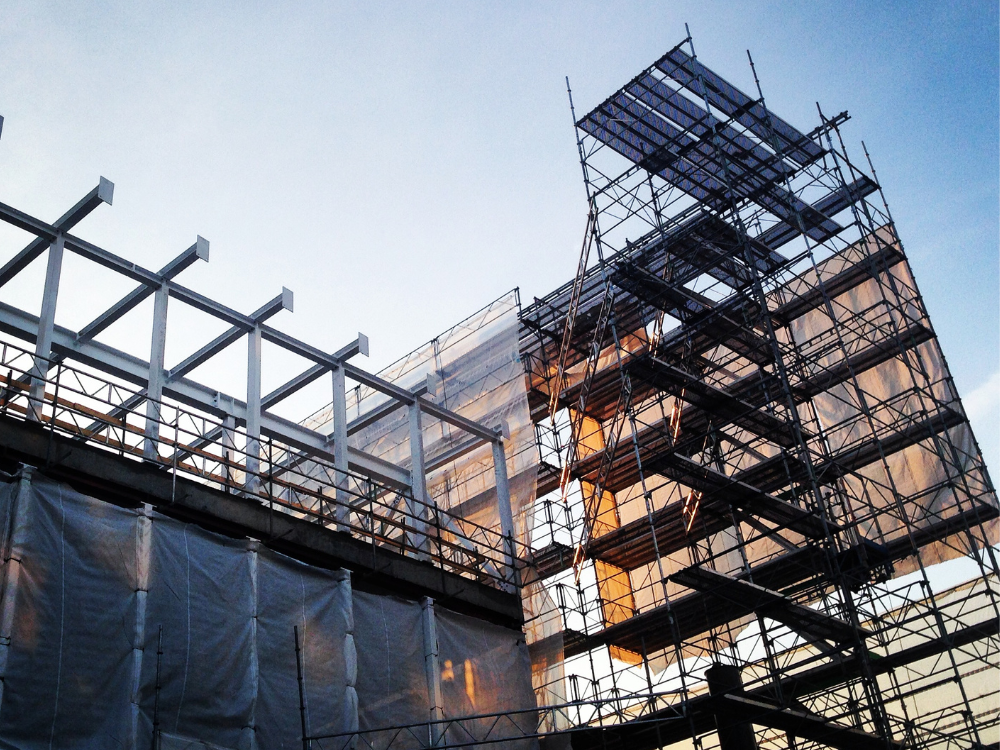
SafeWork NSW conducted a safety blitz from April this year, with a focus on scaffolding and falls from heights safety, after the death of 18-year-old construction worker Christopher Cassaniti on a Macquarie Park construction site in April, when he was crushed by falling scaffolding.
Mr Cassaniti’s mother has become a workplace safety ambassador and has launched a foundation to raise funds for workers killed in similar accidents.
As part of the blitz by SafeWork, inspectors attended more than 700 construction sites across the state and handed out more than 832 notices. That number includes 84 immediate fines directly related to scaffolding.
The Minister for Better Regulation, Kevin Anderson, has blasted worksites which have been found to have altered scaffolding, saying it was “deplorable that anyone would fail to set up properly, or deliberately remove scaffolding parts”
“We need to send a strong message to everyone on a worksite if you do anything that could put someone at risk of injury or death you should face the toughest penalties,” he said. “It’s more than a risk — it’s stupidity at the highest level.”
Currently, fines for failing to protect workers working at heights are $3600, on the spot.
NSW is one of the few states not moving to introduce industrial manslaughter laws but is instead focusing on prosecuting to the fullest extent workplaces and PCBUs that fail to protect workers.
Mr Anderson has said that “we need to strengthen laws and change attitudes to target risky behaviour, before someone gets hurt, or dies.” He explained that SafeWork “inspectors had seen some improvement in scaffold safety recently, [but] the level of risk is still unacceptable with 44 per cent of scaffolds having missing parts, while on 36 per cent of sites it appeared unlicensed workers had altered or removed scaffolding components.”
“We want everyone to make it home to their family at the end of the day, which is why we are reminding everyone of their obligations and responsibilities, not just from employers to their employees, but employees’ obligations to each other.”
More information on Safe Work Month is available here.
-
icare under pressure over premium increases, data quality & claims handling

icare under pressure over premium increases, data quality & claims handling
The NSW workers compensation Nominal Insurer, icare, is under pressure, according to a former workers compensation advisor to the State Insurance Regulatory Authority (SIRA).
Peter McCarthy worked as a principal actuarial advisor for SIRA until March of 2018 and has indicated that it is closing in on crisis point. The problems icare is facing include poor claims management, unenviable worker outcomes through the program and rising costs as warning signs.
Mr McCarthy spoke to The Australian Financial Review, explaining that he had “been advising or working in personal injuries schemes like icare around Australia and overseas for nearly 35 years.” He said that he had “never seen a scheme deteriorate as much in such a short time frame.”
After the WorkCover Authority of NSW was dissolved in 2015, icare was appointed manager of the Nominal Insurer. SafeWork NSW and SIRA were established at the same time.
Mr McCarthy expressed to The Australian Financial Review that employer premiums would have to increase anywhere between 45 and 60 per cent if the scheme went into deficit.
Workers compensation makes up around 50 – 60 per cent of icare’s work. The company is currently worth $36 billion, and also insures builders and homeowners, close to $200 billion in NSW Government assets and offer treatment and care for NSW road accident victims.
The company’s chief executive John Nagle has denied that the scheme is heading for a crisis, but Mr McCarthy cited icare’s less-than-ideal 2018 FY results.
Impaired premiums increased by more than $50 million from 2017 to 2018 FY, up from $35 million to $87 million. As at 2018, there were $226 million in overdue premiums managed by icare, an increase of more than 500% from $39 million in 2015.
In response, Mr Nagle explained that in the beginning, icare found “that there was quite an issue around the quality of data that we had from the scheme agents and quite a bit of tidying up to do around correct allocation of premiums and codes to premiums, which took us quite a while to sort through.”
He also cited a “glitch in our system” in October 2017, during which invoices were unpaid, which affected results at the beginning of the 2018 FY.
Mr Nagle defended the scheme’s performance, and explained that it had been “managing the biggest change to the workers compensation system in 30 years.”
“The transformation hasn’t always been easy, and at times we haven’t always got it right, but the transformation has been largely well-received, and we remain committed to getting the scheme working for everyone,” he said.
Recent scrutiny over their operations has been more accessible to interested parties, after SIRA launched its independent Compliance and Performance Review of the Nominal Insurer in February 2019.
SIRA chief executive Carmel Donnelly that the investigation was initiated after the regulator expressed concerns over two key measurables: return to work performance and the quality of the data, which she explained as “essential to the overall performance of the workers compensation system”.
“SIRA had concerns about whether injured workers were getting the right level of early support to assist in recovery, and whether premiums were being administered in a compliant, transparent and consistent way,” said Ms Donnelly.
One submission to the enquiry notes “extremely poor” customer service levels, “reports of apparent systematic problems with the management of claims”, and staff with “little or no knowledge of the current legislative framework governing the workers compensation system”.
“In addition to this, we have heard of large numbers of errors in the processing of claims, which have caused undue stress to employers.”
Sydney Symphony Orchestra, which challenged the more than 285% increase to its premiums, submitted a report on its experience with icare. They voiced concerns over “how many companies in New South Wales merely paid an invoice for their workers compensation at an increased cost, without being aware they could seek a review of those increased costs,” the SSO’s submission read.
“Our major concern is our inability to manage the financial risk of a seemingly ever-increasing, excessive annual premium, in conjunction with diminished service by icare, in managing our injured/ill employees.”
A full report by an independent reviewer will be published at the end of the year.
SOURCES:
NSW workers compensation scheme under fire– Quotes retrieved and credited to afr.com. https://www.afr.com/companies/financial-services/nsw-workers-compensation-scheme-under-fire-20190918-p52skb
HomeEighteen332022-09-15T03:43:51+10:00